
Anatomy of a Danish Etiquette Approved CV
A section-by-section walkthrough of a real student CV that worked in Denmark. What to put in the header, summary, experience, languages, and About Me, and why each part matters here.
In this guide, we are going to explain how to do a CV tailored for the Danish market. You might have heard about many expressions related to the Danish labour market: "Flat hierarchy," "Informal workspaces." These are not vague descriptions. These are completely aligned with how Danish work culture is organized, and this will impact how you need to search for a job in Denmark.
Before getting into the actual "how-to," which is where part of the value of this guide resides, we will describe the general framework you need to keep in mind when drafting a CV and how to do it.
Your CV is a presentation sheet, not your life story
First and foremost, you need to understand: your CV is just a presentation sheet. It is not the complete story of yourself. It has been proven that HR screeners in big companies only have twenty seconds to read a CV. It is impossible for them to dig into the nitty gritty details. The main takeaway of this is that you need to draft a CV that makes a good first impression on a potential hiring manager or HR screener, one that is willing to give you an interview.
So think about it that way. The only goal of your CV is to get you an interview. After that, you will actually have to interview with the company, and that is where the real work comes in.
One CV per job (and why this matters more here)
You may have heard the rule that you need to have one CV for one job. This is especially true in your particular case for two reasons. First, due to the effects of globalization on local job markets around the world, a single job posting can attract many applications. This should not discourage you though, because it does not mean that all of those applications are relevant to the job posting.
Because of this massive influx of applications, companies have had to develop systems to filter out the noise. Modern hiring systems now use ATS (Applicant Tracking Systems), filtering candidates by keywords. So, whenever you are about to send a CV, make sure you are sending one that is appropriate for the job. Thanks to artificial intelligence, it has never been easier to do this. What in the past would have taken a full day to draft a CV for a single role, you can now do far faster for many roles in a day. Keep in mind though, that this is a double-edged sword: AI might hallucinate, making it necessary to review that the content in your CV makes sense. Also, it may allow you to apply to roles indiscriminately just because it is easy to do so, which might actually hurt your chances of landing a job.
It is common to see people say on the internet, "I have sent hundreds of applications and no replies!" Well, it is likely that they are not even thinking about whether the role might be relevant to them, or whether they might be interested in working for the company. This is very important, as we will see: Danish employers want to get to know the person they are working with.
Anatomy of a great Danish CV
We will focus on the CV-building part for student roles first. We will use an actual CV that Manuel drafted for a Student Assistant position he applied to when he arrived in Denmark a year ago, before he joined his current role.
1. Layout and picture
We recommend using a modern layout, such as a Canva template. Always include a picture, unless stated otherwise by the job posting.
2. Use the headline to your advantage
If the role name is "Student Assistant," put it right next to your name. The reason for this is that it increases the chances of catching the eye of a hiring manager.

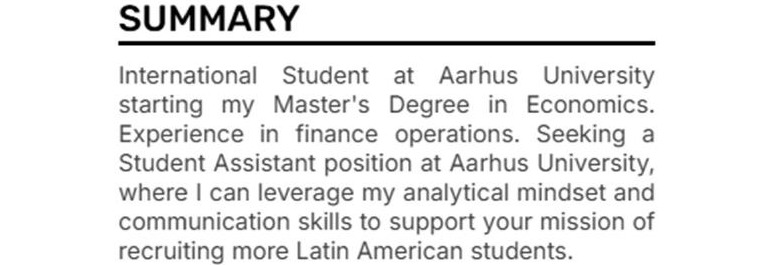
3. A small summary section
Who you are, what you are doing, and, importantly, which of your skills might be relevant for this role.
4. Previous work experience in descending chronological order
Newer first.
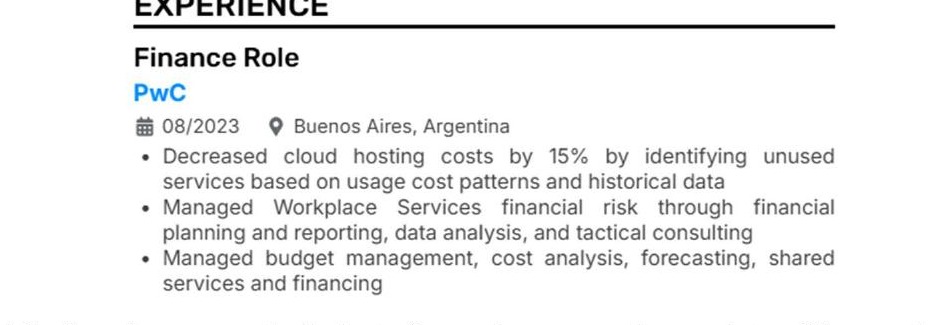
This might be tricky for a few reasons. In the best of scenarios you may have an internship, even though unrelated to the role you are applying to, that you can put into your CV. The important thing here is that you relate what you did in your role to the role you are applying for. For example, if you are applying to a sales assistant role, then you would mention which parts of your experience are related to communication skills and stakeholder management. If you are applying to a data analytics role, you would highlight which parts of your experience relates to working with numbers or building some reports of some kind.
What if you do not have any formal work experience when applying for a student role (that is, non-kitchen work for example)? This can make it trickier, but still, we do not think it is impossible to land a role. The issue with this scenario is that a potential employer has no prior validation from another company that you are employable. So if this is the case, we suggest you highlight situations where you were involved in some kind of work. For example, a project at school or in a volunteering organization. Typically, a hiring manager would need to find a reason to hire you and not another student with experience, so you will need to highlight non work experience. We also recommend including your grades if they are good, as it is an additional data point that the HM would consider.
If you have been applying for some time but cannot find your desired student role, we recommend lowering the bar and applying to very simple boring tasks. For example, during Manuel's time searching for jobs he recalled finding very low skilled positions such as data entry. These may not be the perfect or most fun roles, but they will give you the credibility that another future employer may be looking for. Keep in mind, that as long as a hiring manager believes in your capabilities of learning the job, then you do not need to have worked in exactly that same position.
5. Languages
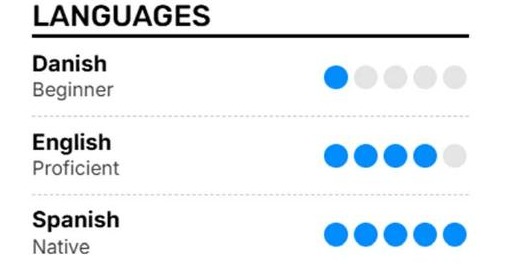
We encourage you to do two things. First, start learning Danish. A willingness to integrate is very important, as you are signaling that you want to invest in the country long term. Once you have done that, state that you are learning Danish, and put it first, above your other languages.
6. About Me section
This is one of the most extraordinary parts of the CV in terms of Danish culture. Whereas other parts of the world are very formal in presentation, the Danish approach is very relaxed. Put something that expresses who you are: do you have any hobbies? passions? a very specific interest that nobody knows about? Put it here.
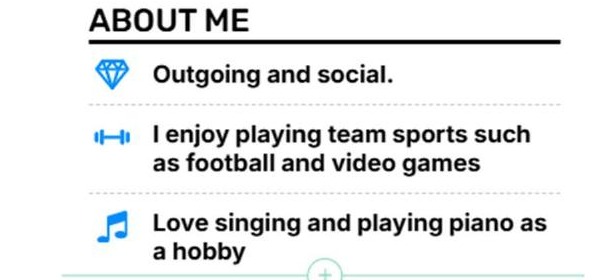
Important note on this part: it should be brief, a minor detail in your CV, not half a page.
Was this helpful?